Choosing the right mattress is not just about sleep quality, but also directly affects physical health. When choosing a mattress, many people fall into the misunderstanding of "the softer the more comfortable" or "the harder the better the spine protection". In fact, whether the hardness of the mattress is suitable should be judged according to their own physical condition and scientific data.
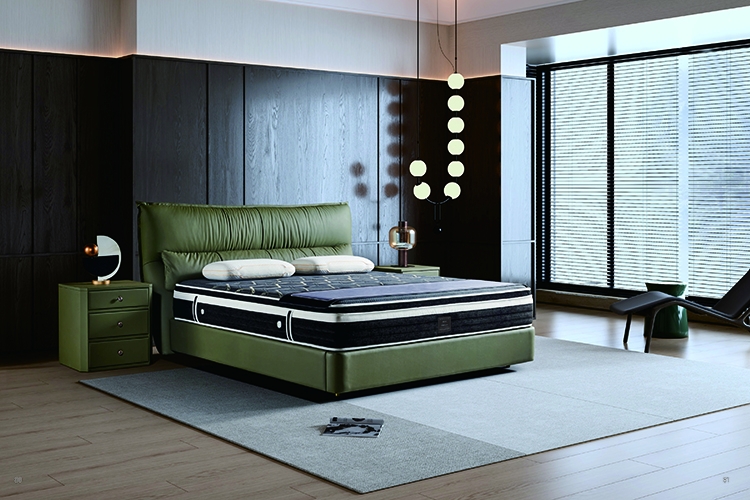
First, judge the hardness of the mattress by body feeling
Lie down support: The ideal mattress should naturally support all parts of your body as you lie down. The spine maintains a natural curve, the shoulders and hips are slightly sunken, and the waist is supported without overhanging. If you feel some parts of your body dangling or pressing, the hardness may not be appropriate.
How easy it is to turn over: If the mattress is too soft, it will feel stuck and laborious when turning over; if the mattress is too hard, it will make you feel like you are on a wooden board and lack cushioning. Turning over is smooth and effortless, which is a performance of moderate softness and hardness.
Body feedback from waking up in the morning: If you often feel back pain and stiff shoulders when you wake up, it indicates that the mattress may be too hard or soft and does not provide good support and pressure relief.
Second, assist in judgment through professional testing data
Matching of weight and hardness: Generally speaking, the heavier the weight, the more suitable for hard mattresses; lighter people are suitable for softer mattresses. This is because different weights have different degrees of depression on the mattress. Some brands offer mattresses customized according to weight partitions, which are more in line with individual needs.
Pressure distribution test: With the help of a pressure distributor, the force on the body when it comes into contact with the mattress can be observed. Ideally, the color distribution is uniform and there are no too many concentrated pressure points, which means that the mattress effectively distributes weight pressure.
Spine curve analysis: By the degree of maintenance of the spine curve when lying flat and lying on the side, it can be judged whether the mattress is ergonomic. The mattress should be able to fit the natural curve of the human body, and the spine is in a straight line when sleeping on the side is ideal.
III. Analysis of common misunderstandings
"The softer the more comfortable" is an illusion: a soft mattress may feel relaxing for a short time, but long-term use can cause the waist to sink, the spine to lose support, and cause low back pain, especially not suitable for people with poor lumbar spine.
"The harder the better for the spine" is not scientific: many elders think that hard beds protect the spine, but in fact, a hard mattress will cause the shoulders and hips to hang, unable to fit the body curve, but increase the pressure on the spine, which is prone to stiffness and pain after sleeping.
Fourth, how to choose the mattress that suits you
Sleep testing is the key: When choosing a mattress, it is best to try lying down on the spot for at least ten minutes, including lying on your back and lying on your side, to feel whether it fits the support.
Pay attention to mattress materials and structures: The softness and hardness caused by different materials (such as latex, memory cotton, springs, etc.) vary significantly. It is recommended to understand the characteristics of each structure before making a decision.
Combined with personal physical conditions: People with lumbar spine problems or special postures are advised to consult a professional or choose medically certified products.
There is no uniform standard for the choice of mattress hardness. The key lies in whether it is suitable for your body structure and sleep habits. I hope that through the above methods, we can help you scientifically judge the mattress hardness and have a truly comfortable and healthy sleep experience.

 English
  Español
  简体中文
简体中文  لالعربية
  हिन्दी
  Português
  Русский
  日本語
日本語  한국어
한국어  Français
  Deutsch