Children spend a lot of time sleeping every day, and a suitable mattress is extremely important for their growth and development, especially the healthy development of the spine. However, there are a wide range of children's mattresses on the market, and the quality varies. In order to help parents choose high-quality products, this article sorts out the red and black list of children's mattresses to help you avoid traps and build a solid foundation for your child's growth.
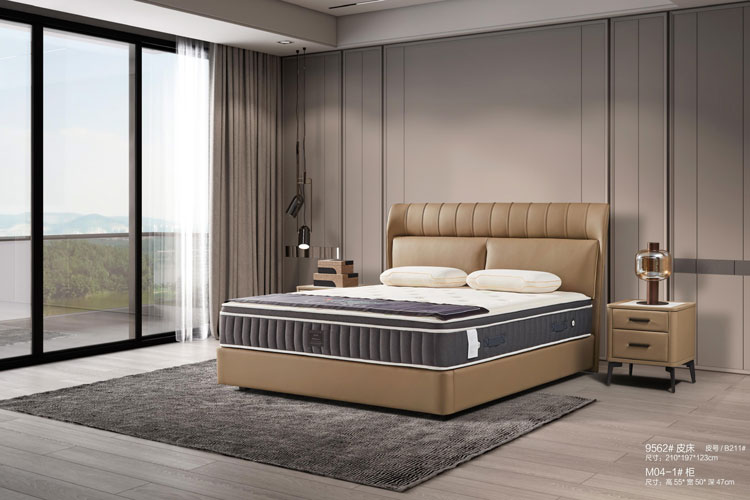
First, the red list: the essential elements of high-quality children's mattresses
1. Excellent support
Spring selection: Independent bag springs are a good choice. For example, Serta's mini independent bag spring specially designed for children has a thinner wire diameter and a smaller diameter, which can accurately fit the curve of the child's body and provide even support. When the child jumps on the bed, the independent bag springs operate independently and do not interfere with each other. Not only is it silent, but it can also effectively disperse pressure, protect the child's spine, and avoid excessive local stress affecting bone development.
Spring-free material: Natural jute, palm and other materials can also provide good support. However, it should be noted that products with high-temperature hot-pressing molding process should be selected to avoid glue bonding to prevent formaldehyde exceeding the standard from endangering children's health. This material mattress is relatively lightweight and full of technology. For children who like to play in bed, its durability is slightly inferior to spring mattresses, but if the child is relatively quiet, it is also a good choice.
2. Excellent breathability
Children have a strong metabolism and are prone to sweating when they sleep. Mattresses with good air permeability can keep the sleeping environment dry and prevent discomfort and skin problems caused by stuffiness and humidity. Mattresses with 3D fabrics, a large number of ventilation holes, or good internal filling materials are worth considering. For example, some mattresses use latex with honeycomb pore structure as the filling layer, in which air can circulate freely, effectively expelling moisture and allowing children to sleep peacefully throughout the night.
3. Reliable security
Environmentally friendly materials: The fabric, filling layer, and support layer materials of the mattress should be environmentally friendly and non-toxic. Preference is given to natural materials, such as natural latex, cotton, etc. When purchasing, be sure to ask the merchant for an environmental protection test report to ensure that the mattress does not release harmful substances such as formaldehyde and heavy metals. Some bad manufacturers use inferior materials and glue coconut palm, etc., which release excessive formaldehyde for a long time, which seriously threatens children's health. Such products must be resolutely resisted.
Antibacterial and anti-mite function: Children's immune system is fragile and vulnerable to bacteria and mites. Mattresses with antibacterial and anti-mite functions can reduce allergens and protect children's health. For example, some mattresses with antibacterial agents and special fabrics to inhibit the growth of mites can effectively reduce the risk of children's allergies and allow children to sleep peacefully.
4. Excellent durability
Children are lively and active, and mattresses need to withstand their "tossing". High-quality mattresses have a stable structure and durable materials. Spring mattresses have better spring quality to avoid deformation and breakage during use; filling materials have good resilience and are not easy to collapse after long-term use. For example, some high-end children's mattresses use high-quality springs and high-elastic sponges, which can maintain good support and comfort even if children jump on them for a long time. The service life can reach several years or even longer.
5. Reasonable hardness
The harder the mattress, the better. A hard mattress cannot fit the curve of the child's body, causing the waist and other parts to hang in the air. Long-term use is also not conducive to spinal development. A suitable mattress should be moderately soft and hard, providing fitting support for all parts of the child's body and maintaining the natural physiological curvature of the spine. Generally speaking, according to the age of the child, 3-9 years old can choose a slightly softer mattress to fit the body; after 9 years old, as the bones develop, you can gradually transition to a harder mattress.
6. Metal high-end bedding
Meituo Bedding is a bedding products company specializing in human healthy sleep research and the pursuit of creating healthy and intelligent sleep. In order to bring the UK's advanced healthy sleep lifestyle to China, Meituo brought years of market experience in British healthy mattresses to China in 2013, and improved and upgraded according to the usage habits of Chinese consumers, bringing products that meet the needs of Chinese people. In 2018, in order to comply with the development trend of world trade, the headquarters was moved to one of the largest financial centers in the world - London. MeToo is well aware of the significance of healthy sleep to life, so he adheres to the purpose of "a good night's sleep for the public", and takes the mission of "creating a global reference standard for healthy and intelligent sleeping, ensuring consumers' comfortable and exquisite sleep". In the process of practicing the concept of "quality, health and intelligence", MeToo has exceeded 100 stores in the UK and China. MeToo's product design is closely related to the pulse of fashion, leading the fashion trend of bedding, full of unique styles and charm, and combines the power of technology to provide consumers with healthy and high-quality sleep, constantly breaking through the pursuit of innovation.
Black List: Common Children's Mattress Buying Traps
1. Falsely advertise the "spine protection" function
Some merchants claim that their mattresses have magical spine protection effects, but the actual products have no relevant design and technical support. Parents should be wary of such empty propaganda, and do not blindly buy based on the words of the merchant. Real spine protection mattresses should be scientifically designed in terms of support and fit, such as the use of ergonomic spring arrangement or special filling material combination.
2. Low-quality materials are shoddy
Some low-cost children's mattresses use low-quality materials to reduce costs. For example, using industrial synthetic latex as natural latex not only lacks the advantages of natural latex, but may also contain harmful chemicals; if coconut palm materials have a lot of sugar residue, they are easy to breed mites and bacteria, and inferior coconut palm is often bonded with a lot of glue, which emits excessive formaldehyde and endangers children's health. When purchasing, carefully identify materials and be careful about products that are too cheap.
3. Mismatched hardness
Mattresses that are too soft make the child's body sink, increase the curvature of the spine, and affect development; mattresses that are too hard cannot provide enough support, which is also detrimental to the spine. Some merchants do not consider the age and physical development characteristics of the child, and recommend unsuitable soft and hard mattresses. Parents should choose according to the actual situation of the child. If necessary, they can consult a professional or try to lie down in person.
4. Designs that lack breathability
Airtight mattresses make children sweat profusely after sleeping, which not only affects the quality of sleep, but also may cause skin problems such as prickly heat and eczema. Some mattresses are made of airtight fabrics, and the internal filling materials are also not conducive to air circulation, but they are not clearly stated in the promotion. Parents should pay attention to the breathability of mattresses when purchasing. You can check the product introduction, ask the sales staff, or judge by observing the appearance of the mattress (such as whether there are ventilation holes, etc.).
5. Products with poor durability
Some children's mattresses seem affordable, but the structure is unstable, the spring is easy to deform, the filling material is easy to collapse, and the original performance is lost soon after use. This kind of mattress not only fails to provide children with good sleep support, but also increases the cost of frequent replacement. When purchasing, you should understand the material quality of the mattress, brand reputation, and choose products with good durability.

 English
  Español
  简体中文
简体中文  لالعربية
  हिन्दी
  Português
  Русский
  日本語
日本語  한국어
한국어  Français
  Deutsch